*Modulo is a reader-supported publication. A special thank you to our paid subscribers and incredible curriculum partners, especially🔬 Science Mom, 🧮 Right Start Math, 🌻 Blossom and Root and 🧬 Mel Science for helping us continue to produce this content.
Find High Quality Homeschooling Programs
Preschool | Kindergarten | 1st grade | 2nd grade | 3rd grade | 4th grade | 5th grade | 6th grade | 7th grade | 8th grade | 9th grade | 10th grade | 11th grade | 12th grade
All-In-One | Art | Coding | Dance | ELA | Foreign Language | Handwriting | History | Literacy | Life Skills | Math | Music | Science | Social Studies | Social-Emotional | Spanish | Writing
Search for anything: E.g. “Khan Academy Kids,” “online homeschool programs,” “homeschooling in Texas,” “how to find a co-op” or try our free curriculum finder.

Intro to Modular Learning
Modular Learning is a new approach to your child’s education. In traditional education, most of the education takes place in one location and through one institution, and is uniform for a group. In Modular education, families pull together a mosaic of resources for their individual chid’s education, drawing from a variety of different organizations and sources: Mastery Learning, Social-emotional learning, Self-directed education, Community and Expert support.

Best hardware and software for “virtual school”
We tested dozens of different conferencing platforms, tablets, headphones and other devices and software solutions to find the best devices to support teachers and young children learning together online. Here are our favorite devices, software, web conference tools, headphones, glasses and more…

How to homeschool on a budget
Did you know that there are just as many homeschooling families who are poor or near-poor as the normal population? And even better, they've spent decades developing creative ways to provide exceptional educational opportunities to their kids on a shoestring budget. Here are some of the best strategies they've shared with me.

How to help kids build social skills while social distancing.
With schools closed for over 3 months, children have been feeling painfully lonely. Families have struggled to find ways to help kids connect and are deeply concerned about their children’s well being - as well as how they’ll develop healthy social-emotional skills during this time. Building meaningful social connections online is definitely possible, but we have to get creative and re-think socialization in a whole new awy.
How to start a learning pod
With social distancing policies in place, many families have been longing for a way for their children to connect socially. Hiring a full-time nanny or teacher to watch children while families are working is simply not a feasible option for many families. Even with some schools scheduled to re-open in the fall, families may feel uncomfortable with their children gathering in large groups, putting them or more vulnerable family members at risk of infection.

Mentors - Emily V
I currently teach 2nd grade at a small independent school in the Mission. Throughout my five years of teaching, I have constantly strived to improve my art. In particular, I am drawn to teaching topics and techniques that focus on the environment, or on tinkering and STEAM. I also have a Master's from Vanderbilt University in elementary education, and a bachelors from the University of Virginia in psychology.

The Weldons - free range learners
While she’d always been very involved in her children’s school, an act of school violence prompted her to draw all of her 4 kids out of school and being educating them on her own. She is now a best-selling author of “Free Range Learning.”“In this episode: Janet speaks with pioneering homeschool practitioner and advocate Laura Grace Weldon, author of the best-selling book Free Range Learning: How Homeschooling Changes Everything. Laura’s experiences capture the essence of how children learn best and gain competence, self-confidence, maturity and wisdom. She and Janet find common ground in their respect for the natural learning process of every child.”
5 great tools to teach reading
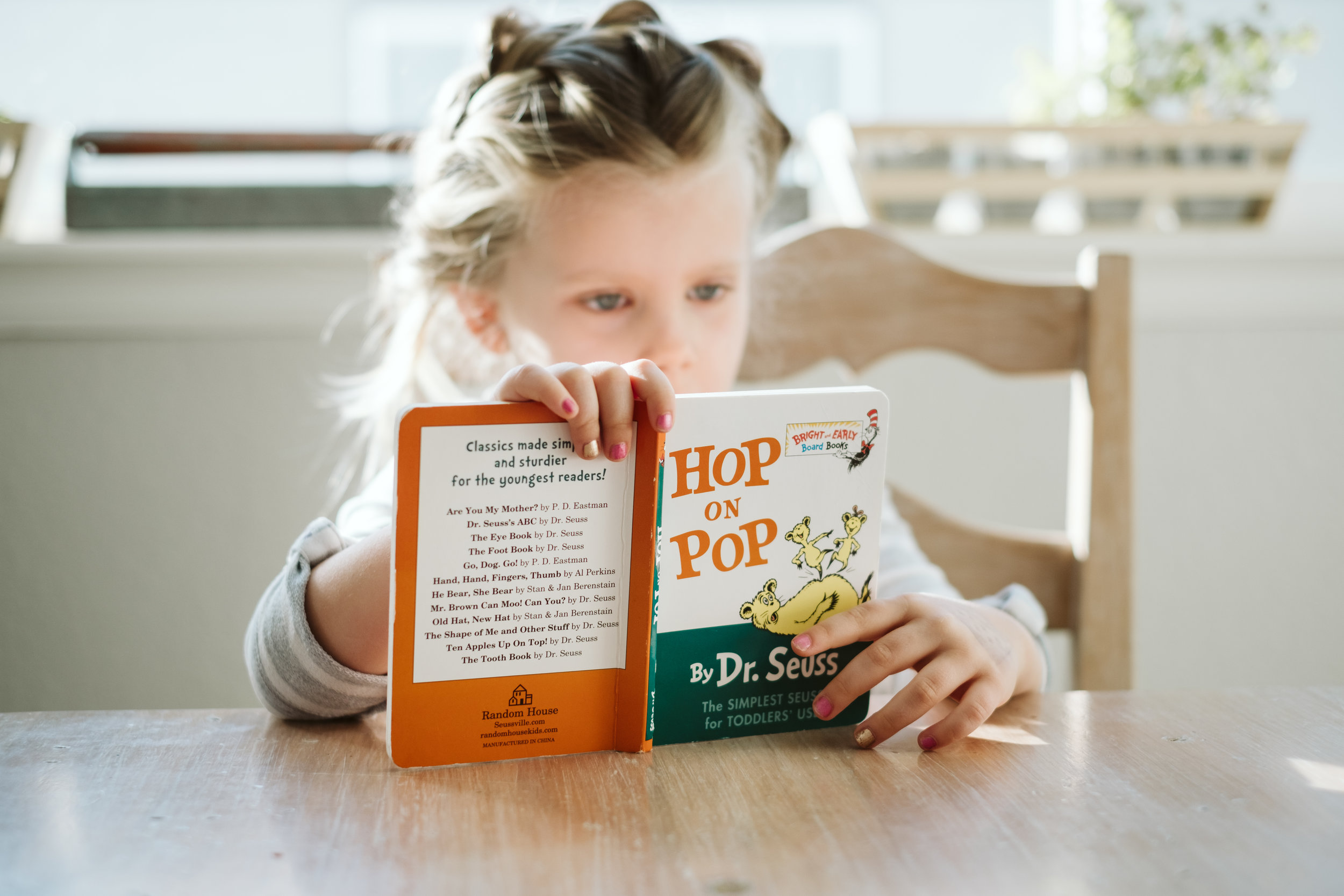
Like math programs, the best tool to support a child’s learning varies considerably according to their learning style (even among siblings). That said, educational specialists widely agree that programs that rely on phonics to teach reading are the most successful. It can be difficult to choose from the multitude of reading tools on the market to make the right choice for your child. Luckily, we’ve reviewed 12 popular reading tools and sifted through thousands of reviews from parents who’ve successfully taught their child to read to identify 4 top programs for teaching reading. We found that “Teach Your Child to Read in 100 Easy Lessons” is the best choice for most families seeking a straightforward, effective approach to teaching their young child to read at home.

The best math programs for parents
After reviewing hundreds of comments from a group of parents teaching their children math from home, consulting with teachers and mathematicians and reviewing each curriculum for accuracy and performance, we concluded Singapore math, which draws on a combination of workbooks and manipulatives is the best option for the widest range of families seeking a rigorous, but engaging mastery-based curriculum that will provide a solid math foundation and accelerate their child’s learning, whether they’re a budding mathematician on track to their first Field’s Medal or struggling in math due to confidence, aversion or special needs such as dyscalculia.

The Critical Thinking Co.
For parents who prefer workbooks to virtual resources and are sensitive to meeting state standards for learning, no all-in-one mastery-based curriculum we’ve tried since 2015 is as well designed to cultivate critical thinking skills, help students achieve higher test scores and engage students in learning than CriticalThinking.Co, established in 1958 and used by 70k schools, 120 countries and 36mm students. Well worth the price, CriticalThinking.Co costs around $25 for a full year of curriculum or an additional $25 for individual subjects. Price-sensitive parents can easily purchase used curriculum online or in local parent groups.

Time4Learning
Time4Learning is a mastery-based homeschool program for PreK-12th grade that uses videos to teach children all academic subjects including Language Arts, Math, Science and Social Studies. Used by over 600,000 homeschool families it’s one of the oldest and most popular comprehensive, secular homeschool programs.

Torchlight
Torchlight is a comprehensive, literature-based curriculum for children ages PreK-3rd grade founded by an educator and homeschooling mom who was having trouble finding diverse, in-depth curriculum for her own children. Torchlight uses a Socratic-inspired approach, while embracing Humanistic thinking. Lessons encourage students to use logic, scientific inquiry and empathy to explore the world around them. It is a mastery-based program, that builds on concepts progressively and support students mastering each concept fully before moving on to the next.

Applying Multiple Intelligence Theory to social good
Excerpt: “Close to forty years after I first began to write about the concept “Multiple Intelligences,” the topic still dominates my mailbox, with questions arising each day,…. Rarely if ever does a questioner talk about the uses to which the several intelligences are to be put. For decades, I have sought to make the point that intelligences are morally and ethically neutral… From now on, when I am asked about “MI,” I will respond, “To what uses do you propose to put the intelligence or intelligences in which you are interested. And so, as we touch upon these issues, we enter a domain that my colleagues and I have been working on almost as long as the study of intelligences: what it means to be good, and what it means to do good. This is the province of what we now call The Good Project. “

Mastery-Based Learning
The idea of giving a child the opportunity to “dive deep” into a learning concept is intuitively appealing to many parents. When a child takes their time to fully explore a subject until they are able to understand, retain, articulate it back, even teach it to others (rather than just scratch the surface and forget it the next day) is what we call mastery. And when they master one concept before moving on to the next, that is called master-based learning.

Forest Schools
Are you looking for a full-day, experiential learning opportunity? Forest schools are a wonderful way to give your child the experience of being in nature and make friends. Many forest schools also offer drop-off options if you need full-time childcare.
Singapore Math
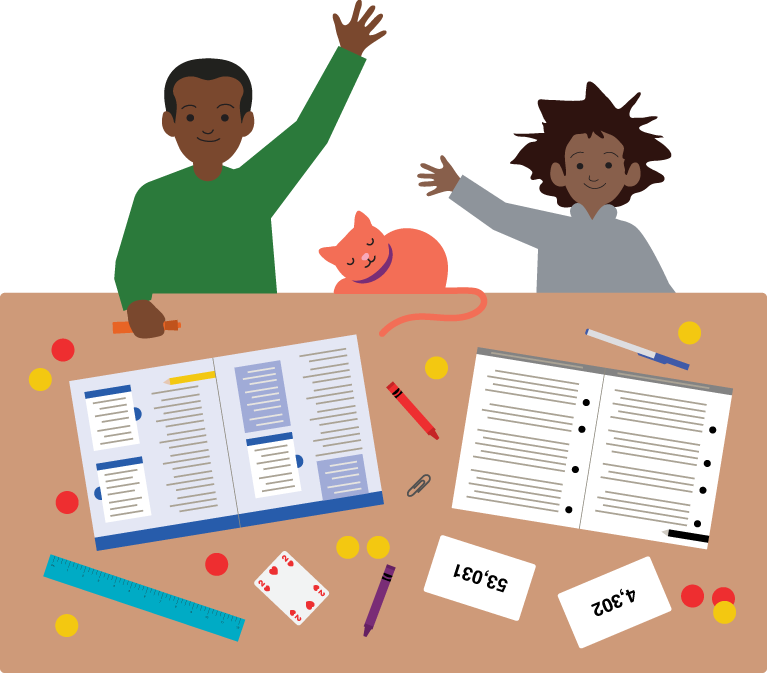
Singapore Math is a mastery-based approach to learning math adapted from the highly successful Singapore public school system and can be started as early as preschool. Mastery Learning means that children can use the curriculum to excel at their own rate, rather than be held back by certain concepts. The child only moves forward when he or she has mastered a concept. This helps students build confidence in their ability and move forward at a faster pace.

Little Earthlings Forest School
One of San Francisco’s most popular forest schools, the Mission of “Little Earthlings Forest School” is to provide an emotional and physically responsible, nature based learning environment for children and parents alike” Full-day drop-off options available.

How I taught my kid to read
“My daughter’s public-school teachers when she was 4, thoroughly excellent at what they did, nevertheless told me that the school district didn’t consider kids my daughter’s age “ready” to read. It was time for Engelmann’s book”.

"Let Kids Play" from the NYTimes
Doctors should prescribe playtime for young children, the American Academy of Pediatrics says.

Learning specialist
Monique is a learning specialist, curriculum planner and school founder with a Master’s in Alternative Education and Community Development from NYU.